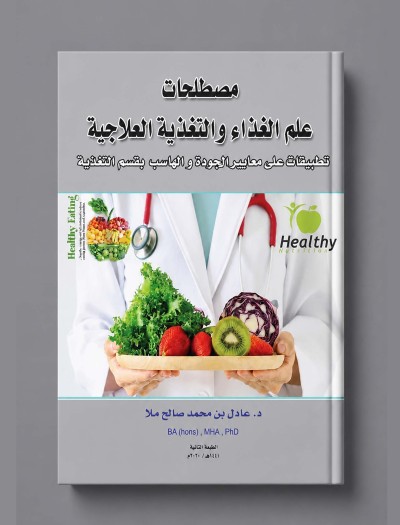
Food Science and Therapeutic Nutrition Terminology (Applications for Quality Standards and HACCP in Nutrition Departments)
Order the Book Now
Health is a blessing from the Creator; preserving it is an act of worship, while neglecting it is a departure from obedience and a disregard for His gift. Many of our behaviors are not justified by health logic but rather reflect limited thinking, practiced while being heedless of the danger and harm they pose to our minds and bodies.
Human health and nutrition are inseparable factors running in parallel, each influencing the other. Nutritional deficiency or excess—in quantity or quality—affects health, just as temporary or chronic illness impacts food intake and the bodily processes that follow. Therefore, an individual must strive to consume a balanced diet that meets nutritional and health requirements to ensure proper growth and health maintenance throughout life, from childhood to old age.
While nutrition is vital for all living beings, it is even more critical for patients. Following a diet appropriate for the nature of the illness and the individual’s condition often leads to faster treatment, quicker recovery, and a shorter duration of illness.
Nutritional levels vary significantly worldwide based on economic status. Nutritionists report that one-third of the world's population does not receive sufficient energy and suffers from deficiencies in proteins, vitamins, and minerals. Conversely, indicators show that over-nutrition is prevalent in America and Western Europe, leading to obesity and related diseases such as heart disease, hypertension, and diabetes.
Specialized scientific research confirms that developing countries suffer from a significant lack of food resources. In 2009, approximately half a million patients were treated for malnutrition in the inpatient departments of hospitals across 43 developing countries, with treatment costs estimated at $950 million. This necessitates creative scientific management that adapts to economic, social, cultural, and health developments to overcome these challenges.
Out of the need for Arabic and English literature addressing health measurement, HACCP systems, and Total Quality Management (TQM)—specifically regarding food science, therapeutic nutrition, and food technology—this book was developed as a reference for students and professionals in this field.
This book, "Food Science and Therapeutic Nutrition Terminology," includes health information and useful English terminology related to all aspects of nutrition and technological manufacturing methods. It provides explanations for a wide range of terms used at scientific, research, and applied levels.
I have also included advice on food handling, transport, and storage methods, as well as storage time limits under normal, refrigerated, or frozen conditions. This serves as a guide for best practices to reduce food waste or spoilage, which affects society and individual health.
The importance of this book stems from the fact that food science and therapeutic nutrition now occupy a significant space in applied sciences. These fields have expanded rapidly in recent decades to keep pace with scientific, industrial, and technical growth, bringing about many new terms, particularly in food science and clinical nutrition.
This book is of interest to everyone working in the field of food and nutrition at universities, higher institutes, agricultural schools, and for food preparers in hospitals, factories, schools, hotels, tourist restaurants, and food industry companies. It also benefits specialist physicians treating malnutrition, health educators, and families seeking to understand food-related terminology.
Given the importance of application, we have included practical implementations regarding public health and hospitals, as well as quality standards and HACCP in hospital nutrition departments. The book is designed to be simplified and easy to understand, divided into three parts:
Part One: Public Health
Covers five chapters: public health and disease, the sciences supporting health studies, environmental health principles, public health assessment and measurement, and HACCP applications within hospital nutrition departments.
Part Two: The Role of Nutrition in the Hospital Industry
Includes five chapters: managing nutrition departments, principles of food science and nutrition, therapeutic diets provided in hospitals, productivity and performance evaluation, and the application of quality standards.
Part Three: Food Science and Therapeutic Nutrition Terminology
Divided into six chapters: therapeutic nutrition and food science terminology, common terms for various types of food, food manufacturing terms, health education terms, medical service terminology, and important terms regarding cosmetics and skincare.
Authored by Dr. Adel bin Mohammed Saleh Moulla




 0
Purchase
0
Purchase
 8 Ebook
 0
Review
0
Review