Privatization of Public Hospitals and its Applications in the Kingdom of Saudi Arabia
Hospitals are considered among the most important means for achieving health, social, and economic development globally. This created a necessity for establishing them in accordance with international standards and specifications, marking a fundamental turning point in the history of healthcare evolution in general, and the development of hospitals in particular. As a result of this significant expansion and the growing number of hospitals, life expectancy has increased, which in turn has driven up demand for hospital services and required a search for alternative funding sources.
This increase in physical and human resources demanded the optimal utilization of available assets. Consequently, hospital administration emerged as a vital managerial science that helps reduce expenditures and improve medical services. Several international health organizations, led by the World Health Organization, have highlighted the importance of hospital administration as an evolving science that effectively contributes to managing advanced medical facilities. The continuous rise in healthcare spending has necessitated finding proposed solutions to reduce government expenditure on health services. Since public hospitals represent the largest segment of the personal healthcare sector and capture the highest percentage of its total budget, governments and healthcare providers in many countries have focused on adopting methods to contain costs and slow down annual operational growth. In my personal view, the most crucial solution is the privatization of public hospitals.
The current global trend strongly advocates shifting away from the public sector and calls for the privatization of its assets. This is seen as a new approach to support the role of the private sector in executing economic liberalization and reform programs championed by international institutions, most notably the International Monetary Fund and the World Bank.
Addressing the topic of privatization in general, and the feasibility of privatizing public hospitals and applying its programs in the Kingdom of Saudi Arabia in particular, serves as a fertile ground for study. It provides a major contribution toward facing challenges, top among which is that public hospital costs in the Kingdom represent the most expensive type of health services. This leads to an imbalance between revenues and service costs, which allows us to say that public hospitals today need privatization to serve as an effective model for funding public hospital services in the Kingdom.
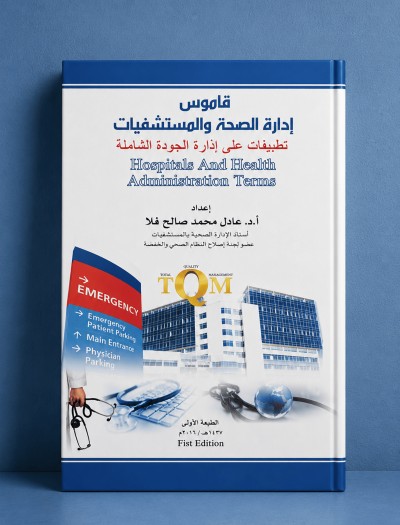
Driven by the need in Arabic libraries for publications in the Arabic language addressing privatization in general and hospital privatization in particular, the idea for this book came about to serve as a reference in this specialization. Given the importance of practical application, we made sure to include an empirical study on the feasibility of privatizing public hospitals in the Kingdom. Care was taken to keep the book accessible and easy to understand, so it has been divided into four main sections as follows.
The first section, titled Hospitals, includes three chapters covering the historical evolution of hospitals, the primary functions of hospitals, and hospitals in the Kingdom of Saudi Arabia.
The second section, titled Privatization, contains three chapters. The first chapter covers the policy of transitioning to the private sector, the second chapter addresses the Saudi private sector and the privatization process, while the third chapter discusses privatization in the Kingdom of Saudi Arabia.
-
Publication name
Dr. Adel Moulla
-
Published Date
01 May, 2026
-
language
Arabic
-
Rating
-
Category
الإدراة والتخطيط
Administrator
-
 0
Purchase
0
Purchase
-
 8 Ebook
-
 0
Review
0
Review
Are you sure?
You can't bring it back!
|